
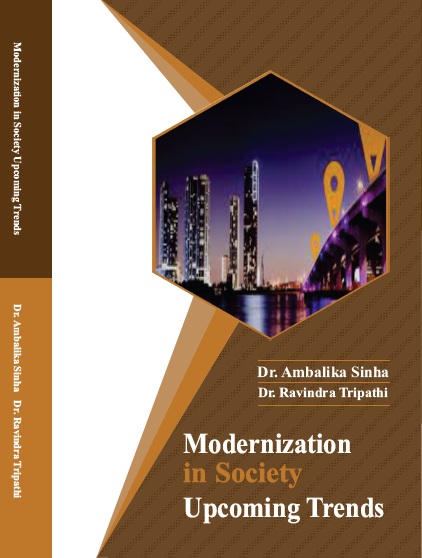
Mode ization in SocietyUpcoming Trends
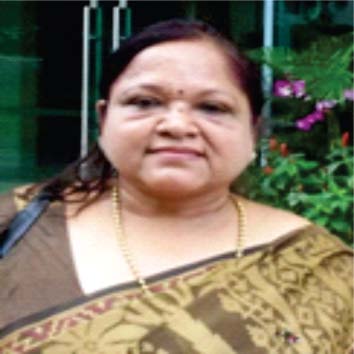
Dr. Ambalika Sinha
Author / Research Scholar
About the Author(s)
Dr Ambalika Sinha,Associate Professor & Head,Department Of Humanities and Social Sciences,Motilal Nrhru National Institute of Technology,Allahabad.Have teaching experience of twentnine years.Have taught Research Methodology,Organizational Behavior,Principles of Management,Social Psychology,Communication Skills,Entrepreneurship and training and development to B.Tech,MSw and Ph.D students.Ten research scholars have been awarded Ph.D under my guidance.Have got a book published titled Stress of Life:Causes and preventionsâ€.Have more than 30 papers published in Inte ational,and National jou als.Have been a keynote speaker and Planary speaker in Inte ational Conferences in Hawai,Mauritius,Dubai,Singapore and have also chaired sessions T Pilani,London,Dubai,Singapore and Hawai.Have delivered many papers in various national and inte ational conference in India and abroad.Have also conducted three short term courses,one FDP,one Management development program and also organized three conferences.
Synopsis & Scholarly Abstract
The term mode isation “does not denote any specific philosophy, movement or thought, but it only indicates a process of change. In fact, “Mode isation†can be explained as a process which indicates the adoption of the mode ways of life and values'â€. It was also described as paradigms shift in society from primarily agricultural to secondary industrial and territory service economy. As a result of the change in the economic structure, the whole society itself underwent changes in customs, values, beliefs and norms. But in the current era the term is given broader implications. Today, the term, 'Mode isation' is understood as an attempt, on the part of the people, particularly those who are custom-bound, to adopt themselves to the present time, conditions, styles, and ways in general. The scientific and technological changes in society have brought about drastic changes in the whole system of social relationship and replaced new ideologies in the place of traditional ones. The jou ey from tradition to mode ity raises the some question for all developing countries, but they are the only ones in a position to reply, in line with the decisions that they take themselves about science and technology as about everything else. This question is double-edged: how to mode ize without sacrificing tradition? How to preserve tradition without compromising mode ization? More than ever, the moment changes of politics that we are witnessing as we approach the end of the twentieth century wa any developing country to be sensitive to the implications of this question. Mode isation in social structure is affected by the historical, cultural and political background of each country, the institutional and political prerequisites for making good use of the scientific and technical resources available mainly relate to these noneconomic factors. In current era of socio-economic and political changes whole world moving towards knowledge economy. These knowledge orientations for society provide opportunity for innovation and rethink in area of science, economic, psychology, literature, management as well as other major area of study So through this edited book editors tried to bring different ingredients, consequences and solutions through Research papers of different discipline of Researcher, Academician, Industry and Bureaucrats. We are greatly indebted to Prof. Rajeev Tripathi, Director MNNIT Allahabad for inspiring us and providing guidance to publish the selected conference papers in the form of edited book. We are highly thankful to our director sir for writing foreword for this edited book. We are also thankful to Prof. Niroj Banerjee chairperson, Dr Rajesh K Shastri, Convener Dr. Jyotsna Sinha, secretary of the National Conference for extending their support for the book. We would like to appreciate all the scholars and researchers for their contributions and thankful for their active participation. We convey our special thanks to members of the organizing committee of the national conference namely Taufique Ahmad, Shatabdi Bagchi, Abhishek, Nikhil Yadav, Priyanka Tandon, Mudit Singh, Iftikar Ahmad, Manis, Divya Rai,, Swati Gupta, Jitendra Kushwaha, Aamir Aijaz, Neeraj Gautam and Sushil Kumar.